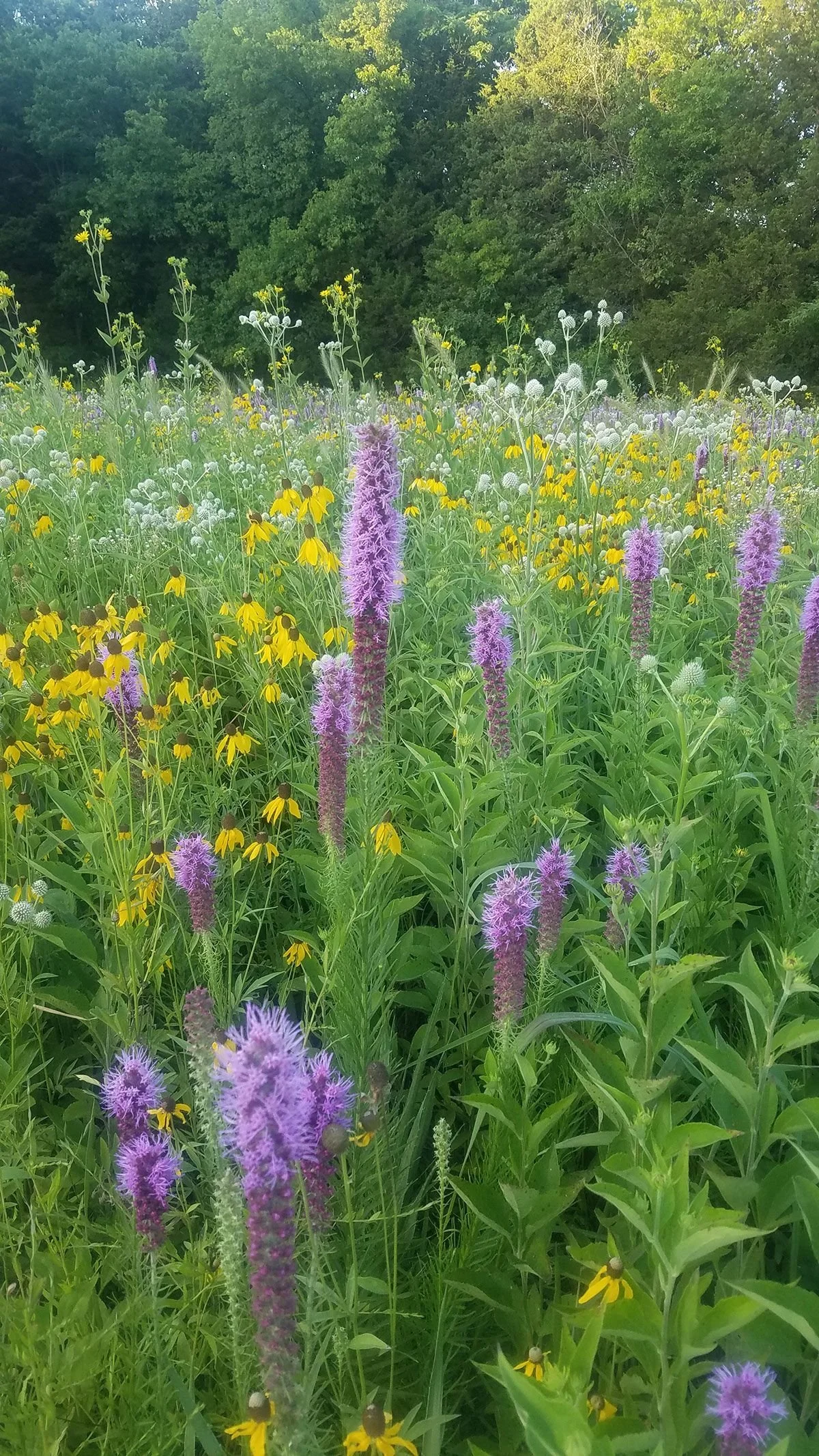
Learn about native plants
What are Native plants?
Plants that have evolved in specific location/region for thousands of years. Many of these plants are crucial for the survival of Native bees, butterflies, and wildlife, since they evolved side by side for so long. This is called the food web and it is delicate and complex system that is endangered and due to human migration/interference and changing climate. When this system is broken, beneficial insects die off, harmful insects move in, wildlife starves, and the land itself changes into something it is not supposed to be. This is becoming more apparent in the Atlantic Coastal Plain with rapid development and large influx of people moving to this area. There is a real strain on our natural resources. In alot of areas (especially wetlands) the damage has been done and change is needed. Human behaviors need to change and that includes how we view the land beneath our feet. There are many ways to practice conservation and protect the land that provides for us, with adding native plants (especially keystone and host plants) back into the eco system you can start your contribution to fixing what we have broken.
What are Native plants so important?
Since native plants evolved in a specific region for so long, they also evolved with the land, the seasons, with the wildlife, insects, and with humans. Native plants are deeply connected to a delicate system that all relies on each other to survive. The most talked about example at this time is the Monarch butterfly. This amazing creature is endangered now due to rapid development and destruction of land in its migration path. Monarchs need a specific host plant to lay eggs on. This plant is called the milkweed. Milkweed was once in abundance and has been disappearing at alarming rates. An example of how we can save an endangered species is planting its host plants (milkweed) that is native to your region. If every neighborhood planted a patch of milkweed along every migration route, the Monarchs would have a solid chance of repopulating. This makes milkweed a keystone plants, because a specific species depends on it for survival. The monarch is not the only one in trouble, hundreds of our native bees, birds, and butterflies at risk at becoming endangered or extinct in our lifetime.
Native plants are well equipped to grow in specific regions. Living in on Atlantic coast can be challenging to establish a garden without relying on significant amount of amendments, which cost money, requires strenuous labor, and alters our native soils. This is due to our soil being quite acidic, sandy, and lacks nutrients needed for many common garden plants. The Coastal Plain also deals with frequent drought, hot and humid summers, salt spray from ocean, and frequent flooding. When native plants are established, they can handle these difficulties without human interference. Meaning you can have a beautiful flowering garden, that can provide for you and wildlife and also has the bonus of being easy to maintain.
Not interested in consultation. Here are some tips of starting a Native garden/landscape on your own
A general guideline to strive for with a native garden/landscape is to remove invasives and try to add 70% or more of natives. If starting small, please research keystone/host plants to start with, to provide most ecological value. These can be easily added to existing landscape/garden.
General rule with natives (with exception of a few annuals/perennials), if growing from seed or purchasing young plants, is year one they sleep (plants are usually small), second year they creep (larger growth, flowers), year three they leap (grows into mature size, starts to fill in area, and starts full blooms). So don’t give up on them, they need time to establish. Trees and shrubs can take more time to flower/fruit but often provide the most long-term ecological value as a host plant or shelter for wildlife.
If starting from seeds, please review if specific seed needs cold stratification. Most natives perennials do require this step to germinate.
provide shelter such as logs, leaf litter, pinecones, piles of branches, rocks, anything that insects and lizards can hide/over winter in.
provide a water source, such a dish that refills/empties with rainwater or bird bath is cleaned daily (prevent spread of avian diseases). A small pond or water feature would be great additions to any Landscape/Garden
Visit your local state extension office or website for recommendations on planting natives in your specific region.
Pro tip: when searching for Native plants that you may be interested in adding to your garden, be sure to check
common name and scientific name. Example: Black eyed susan (common name) / Rudbeckica Hitra (scientific name). There are many varieties of Black eyed Susan and not all are native to coastal plains.
Use native range map to confirm native status. This can be found on www.bonap.org or by doing google search using scientific name to confirm native status
Some natives may be hard to source/purchase. General rule is to first plant native plants to your specific county or eco region, especially keystone/host plants. Sometimes this is not possible, so next option to try plants natives within 100 miles of your location.
All natives grow in specific conditions, but we can usually mimic these conditions in your home garden. It is all about knowing the plants normal growing conditions, including water needs, preferred soil type, sun requirements, etc. Never hurts to research the growing conditions of each plant.
A general guideline to strive for a garden/landscape with no invasives and 70% or more of natives. If starting small, please research keystone/host plants to start with, to provide most ecological value. These can be easily added to existing landscape/garden.